Field Research
- Irene (Shiyin Zheng)

- May 23, 2019
- 3 min read
This week we conducted field research, trying to figure out the first two questions from last week. We used three research methods, diary study, draw the scenario and speed dating & interviews.
Field research
First we wanted to understand how each of us interpret the brief. We did a brainstorming session among ourselves, trying to answer the question "Without money, what can be the mode of exchange?".
We used a helpful method introduced by Johnny - after ten minutes of brainstorming, we shared our ideas, then we rotated the sheet and brainstormed again building up on another one's ideas.
The result turned out that we were all interested in experience exchange, varying from culture to living environments. So we continued with this direction.

Make & test & learn
Before doing the formal research, we did two make & test & learns to test out our research methods.
1
We did a small test in class. We gave more than half of the class a paper to write down the experiences they would want to share and the experiences they would want to exchange. We wanted to know how people interpret these two words and get a basic understanding of what they want to exchange.
This exercise helped in how we did the diary study in our further research where we focused on exchange of experiences.

2
We also did draw the scenario exercise inside our group and with some peers from class. We found that the exercise ran well between friends and we extended this method into strangers in our later research.

Diary Study
As said in the former section, according to the results of the test, we revised the questions for diary study. We added some limitations like the time duration, and who is the person. We also focused only on exchange of experiences this time.
We sent out the instructions online to around 20 people with following instructions:
Please send the text and voice recording by 12 o’clock tomorrow through the medium you received this exercise.
Write down/take pictures of the things and/or the activities during the day from now that were valuable to you.
At the end of the day, at a convenient time to you, voice record/write/draw a scenario, where you want to exchange any kind of valuable experience with a stranger for a day or few hours. The exchange may be in terms of any kind of experience you would want in your present or future.
(Example: experience a different culture or festival with a local guide, exchange your place of residence for a day, shadow a person in an organisation for a day to see how they work, etc.)
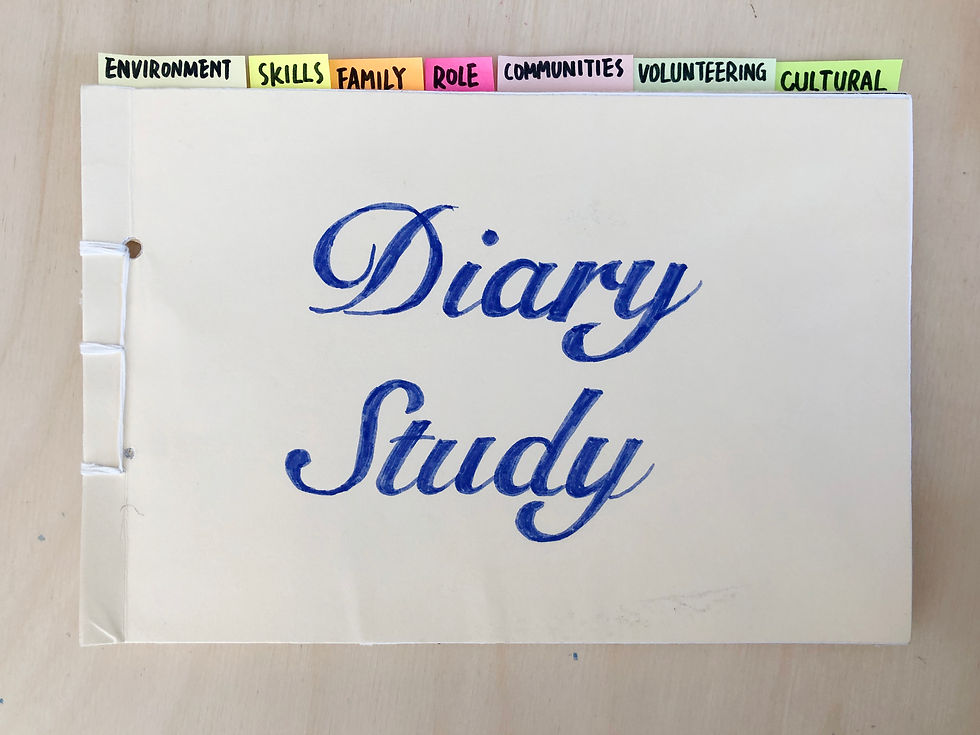
We got 17 answers back and we analysed what they valued and what they wanted to exchange. We put them into categories and made a physical version of the result: a diary book.


Speed Dating
We showed people three storyboards to get them easier understood with our topics and concepts. Then we asked questions to better understand their thoughts. We translated the recordings into scripts and categorised them by positive/negative/suggestions.


Draw the scenario
We asked pairs who knew each other to draw experiences they would like to change with each other. But after several rounds we found it hard to define how close the two people are, so we changed our method.
We started again with asking the last interviewee to draw an experience they would like to share with a stranger for a day or few hours, the second interviewee would get that experience and in return draw another scenario for the next participant. It is interesting that we started with food but continued with a cultural necklace and ended up in a building, and people have their own understanding of exchanging while drawing the experience.


Learnings
suggestions
For the service scenario we need to narrow down our audience - example organisations, universities, etc.
Personalise the volunteering by making people feel if they are helping others, they are also helping themselves.
Have a system of authentication for profiles.
Give the option to customise the interests.
concerns
The system will not be viable for everyone.
This system might be easy to take advantage of.
May not trust such a system easily.
It removes the natural flow of meeting people.
Reflection
Exchanging experience means walking into others' shoes. However, our categories are still being too broad and we need to define our user groups more clearly. If we are going to design something for people who know each other, then we need do clarify what is "know each other". If we are going to design for strangers, how can be build the trust up? Shall we design for a specific tribe (like people who love sports and volunteering) or design inside existing organisations?
We seemed to be lost at this stage.


Comments