Co-Sleep: Couple Sleeping Research
- Irene (Shiyin Zheng)

- Feb 12, 2019
- 3 min read
Updated: Apr 20, 2019
As said in the previous blog post, we conducted a second round research. This time, we focused on people sleeping with human partners, couple sleeping.
Couple Sleeping Research
We did interviews with more detailed questions. We know that we should also do some observations because people can be unsure or lie about themselves, however, couple sleeping is such an intimate and private thing, we only managed to do some observations based on books and videos.
Interviews
Jing and I shot together and made an interview cut to show different answers for four specific four questions, which is quite interesting.
This time we did a few more interviews with couples. We asked about background information (like the size of the bed, sleeping problems), details about last night's sleep (wake-up times, sleep positions) and other general questions (how does your partners sleep quality affect your own, how can you tell if your sleeping partner is dreaming/asleep/awake/sleeping well/sleeping badly, what annoys you about his/her sleep habits). We laid more emphasis on how couple interact with each other and their feelings about the process.


Book research
Luckily by chance, we found that someone has already done sleep observation and published a book called "sleep". The person is called Ted Spagna, and he was trying to expose the secrets of human sleep behaviour by photographing intimate narratives of sleeping figures with a time-lapse camera.
I got the book from the school library and got some interesting findings. By Ted's bird's-eye view, people do not seem to be people anymore, they are like unconscious creature moving constantly. Couples who sleep next to each other can be seen as a system: one moves and affects the other, then the other moves, and finally they would get to a new balance. But all these moving during sleep is unconscious, people who are in sleep are like another person.

Video research
We also found a video which documented several couple's sleep. In the first one, the man woke up and found his wife was not there. He seemed a little upset, “Whenever I get up in the morning and she’s not in bed, which is rare, I miss seeing her first thing. ” “It’s just a good start to my day.”

However in the second one, the husband was coming back late from work, and the noise he made woke his wife up from sleep.
We found that it is unavoidable that couples continuously affect each other while sleeping together. However, though it keeps annoying them, it also brings them love, intimacy and affection.
Findings
Couples like to spend time awake with each other in bed to enhance their sleep. This includes spending time after sleeping.
Unsynchronised sleeping/waking time. (Conscious behaviour and habits) may affect others.
People perform unconscious behaviours which affects their partner during sleep.
Summary graph
I tried to summary our findings in a more logical and visual way. Actually, I had the idea of making this graph from a couple's sleeping graphs. We asked one couple to use the same sleep recording app to record their one night's sleep together. Then we made the graphs into one and flatten two curvy lines into two directions.
We connected the waking up points together and the sleeping points as well. The graph shaped five areas, where the triangles meant one was in sleep while the other not. During this time, one may easily be affected by the other. These two triangles were the time we want to focus on.



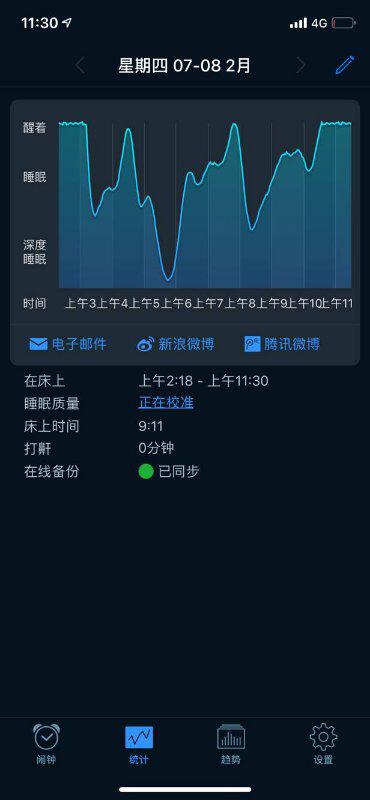


How I generated the idea of the summary graph
Reflection
We tried to take a whole night's time-lapse video for a couple to see what would happen. We also designed questions to ask after taking the video. We did find a couple who was willing to do this, though, we still failed to finish it in the end. It took far more effort than we thought to get the video, not to mention that the couple were not in London. Co-Sleep is really a tough topic for research, and I am glad that we tried our best and made it still.
Coding the scripts is an important part for interviews. It helps you to pay attention to every detail and also helps you to compare between people.
Design research is not asking questions decided by generalisability. It is often qualitative. It is going out and asking people what does this mean to you and how you feel about it. It means asking about feelings, thoughts and opinions. It does not have to be validate things and when we are having numbers, we are missing some important parts.


Comments